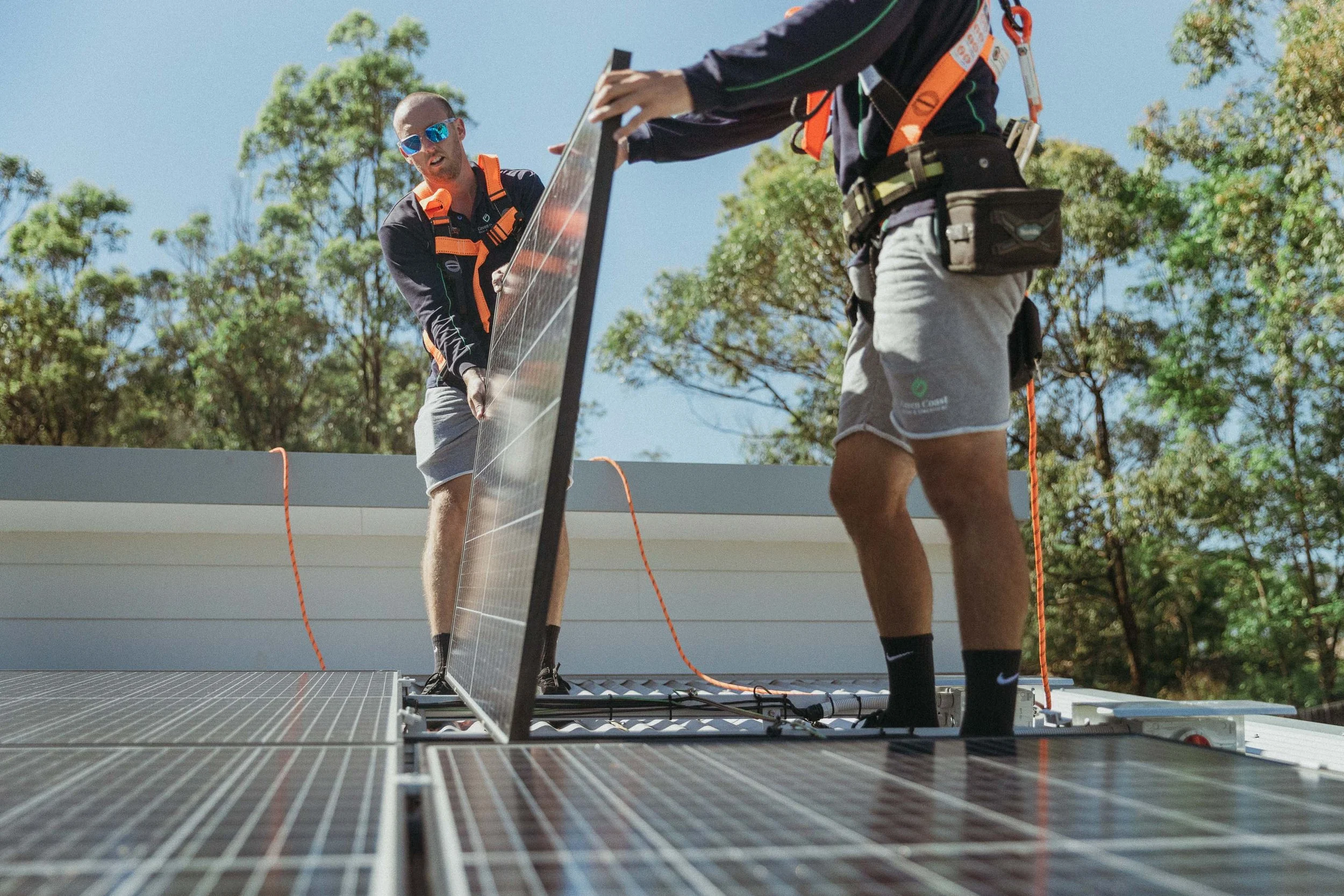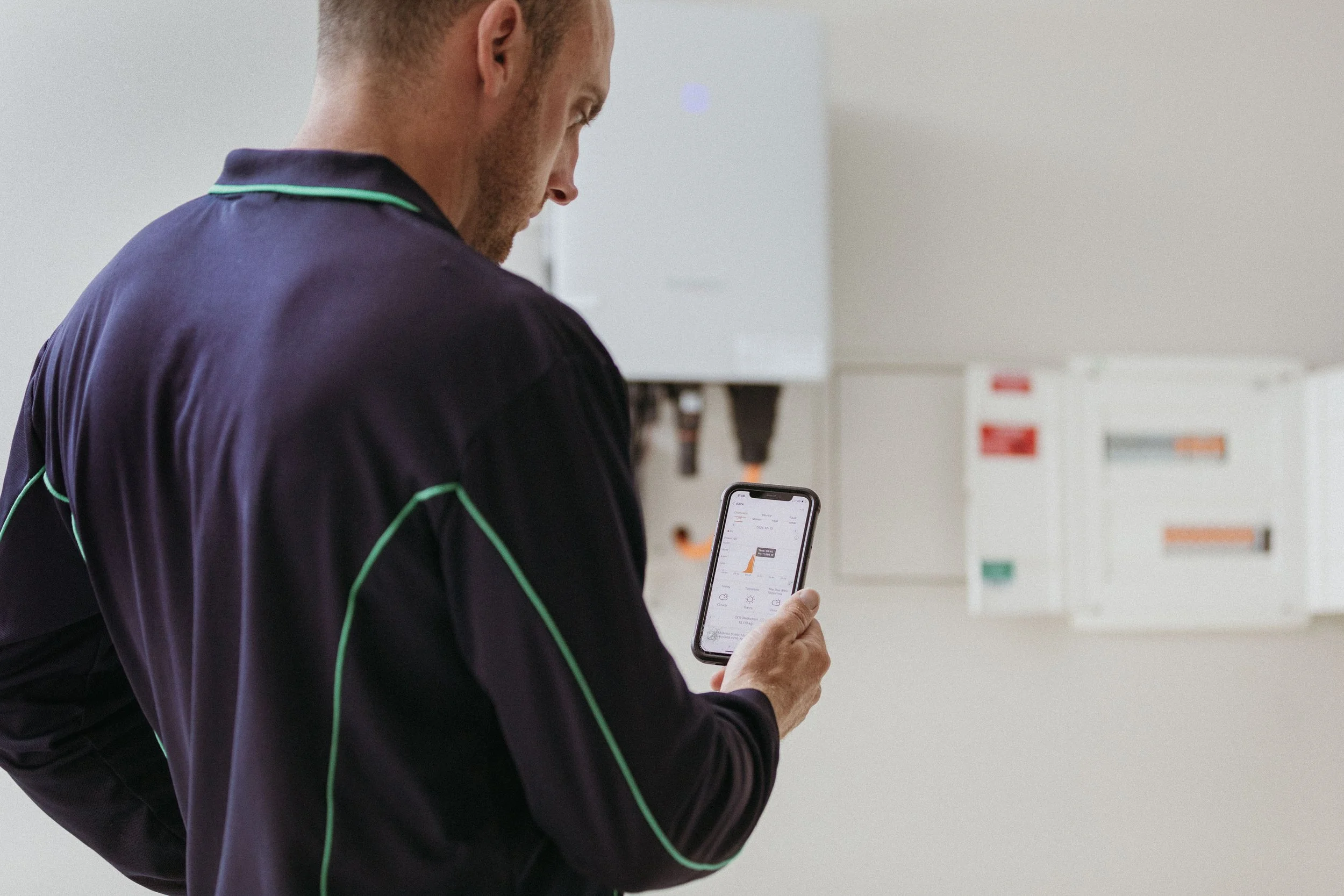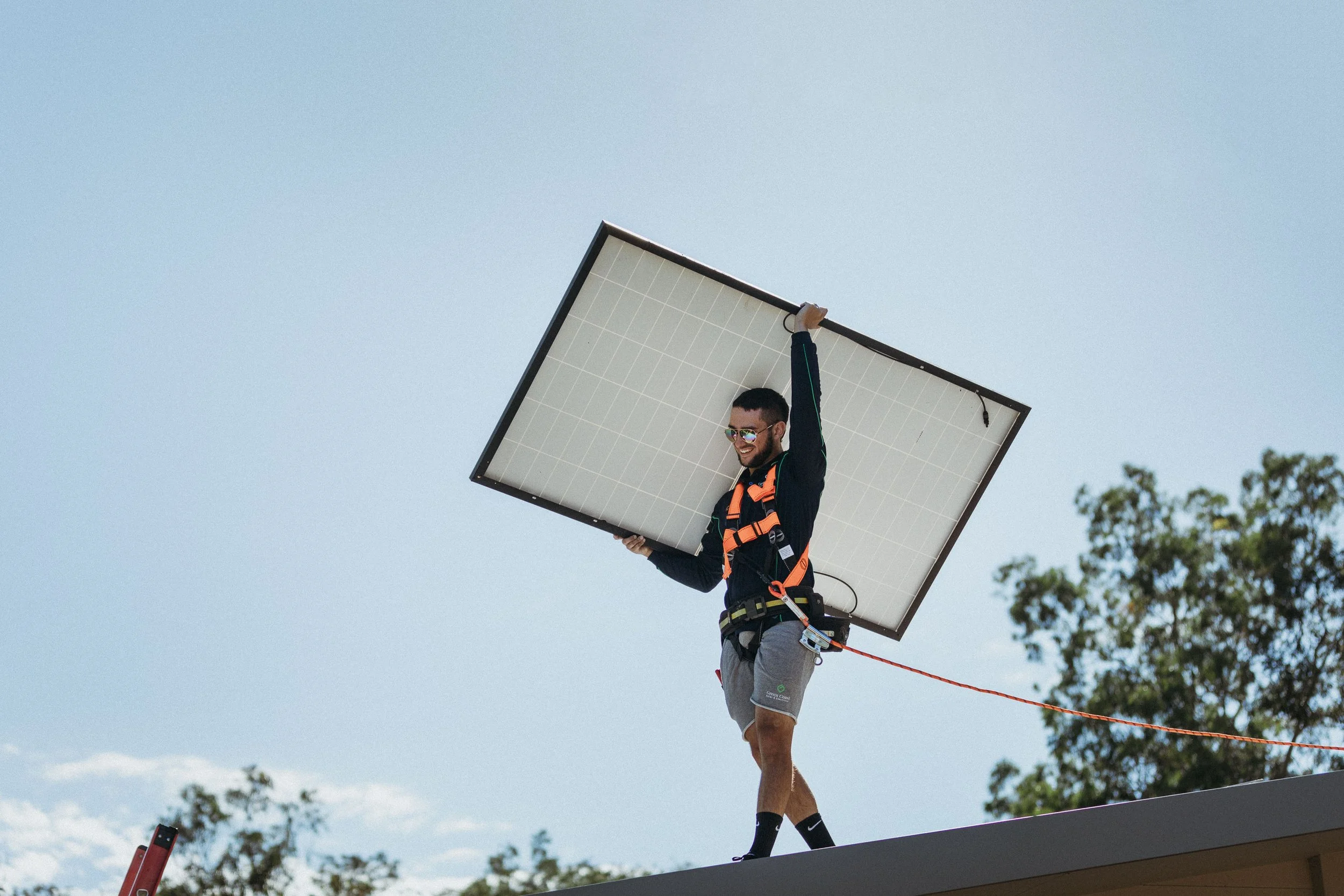
Drive through Buderim, Sippy Downs or Pelican Waters and count the roofs. On many streets more than half already have solar. The Sunshine Coast has some of the highest rooftop solar uptake in the country, and Queensland as a whole passed the point where more than half of suitable homes have panels. That is a good thing. It also changes the maths for anyone installing now, and most sales pitches have not caught up.
We install from Caloundra to Noosa and out to Nambour and Maleny. This is the honest picture for a Sunshine Coast home in 2026.
When everyone exports at once
The Sunshine Coast is on the Energex network, the same as Brisbane and the Gold Coast. Every home on the street pushing solar into the grid at 11 am on a clear Saturday is precisely the problem network operators call congestion, and the streets with the most solar feel it first.
Two consequences follow:
- Fixed export limits bite. The standard single-phase export limit is 5 kW. A larger array on a home that is empty during the day spends much of the middle of the day throttled back, generating less than it could because there is nowhere for the power to go.
- Dynamic connections cut both ways. Energex's dynamic connection lets a compatible inverter export up to 10 kW per phase when the local grid has room, and reduces it when the grid is full. In a high-solar suburb, the reductions on sunny weekends are real. In exchange, a dynamic connection allows more solar and battery inverter capacity to be installed, which is what makes a serious battery system possible on a single-phase home.
Neither of these is a reason not to install. They are reasons to design differently.
Exporting is not the goal any more
Feed-in tariffs in south-east Queensland are set by retailers with no minimum, and at the time of writing most sit in the low single digits of cents per kilowatt-hour, often with a daily cap. The electricity you buy in the evening costs several times that. The old idea of "put on as much as you can and sell the surplus" made sense a decade ago. It does not now.
For a Sunshine Coast home the value is in using your own solar. That points to three things:
- Shift what you can into the day. Hot water, the pool pump, the dishwasher and washing machine, pre-cooling the house before the afternoon. Timers and a simple hot water diverter do a lot of this for very little.
- Store the rest. A battery sized to your evening usage turns cheap exported power into power you would otherwise buy at the peak rate. On a home with a decent evening load, this is where the numbers work.
- Size the array to the house, not the roof. A large roof does not mean a large system is right. We size from how and when you use energy, and we tell you if a smaller array with a battery beats a bigger array without one.
Batteries and the 2026 rebate structure
The federal Cheaper Home Batteries Program discounts eligible batteries at the point of sale. From 1 May 2026 it uses a tiered structure: roughly the first 14 kWh of usable capacity gets full support, capacity above that gets progressively less, and the overall level steps down every six months. For most Sunshine Coast homes the sizes that make sense sit inside the fully supported band anyway, which is worth knowing before anyone talks you into a much bigger battery to "maximise the rebate."
Queensland's own state battery scheme closed in 2024. There is no state top-up at present. Eligibility for the federal program is decided by the government, and we walk through it with you honestly rather than treating the deadline as a sales tool.
Sunshine Coast conditions
A few local factors we design around:
- Coastal salt and wind along the strip from Caloundra through Mooloolaba to Coolum and Noosa, where panels need salt mist certification and racking must suit the wind category. The same rules as the Gold Coast coast apply.
- Hinterland shading around Maleny, Montville and Eumundi, where tall trees and steep sites mean a proper shade analysis matters more than roof size.
- Summer storms and hail. Panels are hail-tested as part of certification, and a properly fixed array handles storm winds. Surge protection in the switchboard protects the inverter and the house.
- Older switchboards in established suburbs like Nambour, Buderim and Caloundra, which may need work before solar or a battery can go in. See our switchboard guide.
Replacing or upgrading an older system
Because uptake was early here, a lot of Sunshine Coast homes have systems from ten or fifteen years ago. Small arrays, ageing inverters, and in some cases a legacy feed-in tariff that is worth checking before anything changes. Adding a battery to an old system is sometimes straightforward and sometimes not, depending on the inverter. Replacing the whole system is often cleaner. We look at what you have on site before recommending either, and we will tell you if leaving it alone is the right answer.
Who we are
Green Coast Solar & Electrical is a Gold Coast company that has installed more than 6,000 systems across south-east Queensland since 2009. Our own team does the work, no subcontractors. Our director is an engineer first and one of a small number of licensed battery installers in Australia. We handle the Energex paperwork, the rebate assignment and the after-sales support, and our workmanship warranty is ten years.
If you are anywhere on the Sunshine Coast, book a free consultation. It is a relaxed phone or video chat about your home and how you use power. If it is a fit, we come out, look at the roof and the switchboard, and design something that suits your life. No pressure, no obligation.
Sources and further reading
- Energex: about dynamic connections
- SolarQuotes: home solar power in Queensland, statistics and resources
- Australian Government: Cheaper Home Batteries Program
General information only, current at the time of writing. Uptake figures vary by source and date. Network rules, tariffs and rebates change, and we confirm what applies to your home during the consultation.